Browse Vedic astrologers and compare them by approach, specialties, and reading style.
🔍 Need more options? Use the full search
Showing astrologers who practice vedic astrology
ⓘ Tap a badge for a quick tip
Dr. A.S. Kalra (Ajit Singh Kalra) is a Vedic astrologer with a background in both professional practice and astrology education. He has developed Vedic Astrology...
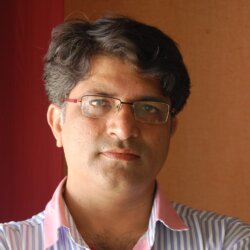
Dr. Subrata Chatterjee has practiced astrology for over 35 years, building his expertise across multiple interconnected systems including Vedic astrology, the KP System, Palmistry, Vastu,...
Sidharth Jagannath Joshi began studying astrology in 1997 and started practicing professionally in 1999, opening his first office in Bikaner. He is a postgraduate in...
Dr. Praveen Chauhan, known as Acharya Praveen, holds a PhD in Psychology from Shobhit University (Meerut), an M.A. in Vedic Astrology from Gurukul Kangri Vishwavidyalaya...
Acharya Sunil Mehtani is a Vastu consultant, astrologer, and numerologist based in Delhi, India, with over 18 years of professional experience. Credentials include Vastu Vachaspati...
Aman Deep Saini began studying Vedic astrology in 1994 at the age of 19, initially as a personal interest, under the direct guidance of Prof....
Amit Chakraborty, also known as Amit Sree, completed formal astrological training at Jyotish Devagao in Delhi and M.A.R.P in Calcutta. He practises within the traditional...
Ana Das operates under the name Astro Tarot by Ana and has practiced in Kasba, Kolkata for over 15 years. She integrates Vedic astrology with...
Anju Rajpal practices at Flat 204E, Bollywood Heights 2, Peermuchalla. Her astrology sessions are based on birth chart analysis covering career, relationships, health, and life...
Ashok Acharya is a Vedic astrologer and spiritual advisor with practice rooted in Sanatan Dharma and ancient Vedic knowledge. He describes his training as lineage-based,...
Dr. Yogendra Deswar, known as Astro Yogendra, began practicing Vedic astrology around 2012 and founded MaxFate Private Limited, a registered company in India. His platform...
Aswin Subramanyan was born and raised in Chennai, India, into an astrological lineage passed down through maternal heritage. His earliest mentor was his maternal granduncle,...
Yogi Baba Prem (Tom Beal) is the founder of Universal Yoga Inc. His work integrates Jyotish, yoga, Ayurveda, Sanskrit, and Vedic philosophy within the traditional...
C. S. Rao holds an M.A. in Astrology from P.S. Telugu University, Hyderabad, and works across Vedic astrology, the K.P. system, Ashtakavarga, and selected Western...
Chinta Gopi Sarma Siddhanthi has been practicing Vedic astrology since 1994, following a traditional lineage-based approach to Jyotish. He has received the Swarna Kankana honour...
Christina Collins works through Celestial Resource and has studied Jyotish since childhood within a third-generation sidereal astrology family lineage. She holds the titles Jyotish Visharada,...
Curtis Burns has been practicing astrology since 1988. His studies span modern Western astrology, the Cosmobiology of Wilhelm Ebertin, ancient Greek and medieval astrology, and...
Dennis Flaherty is a senior Vedic astrologer, teacher, and writer who played a foundational role in introducing Jyotish to Western audiences through conferences, publications, and...
Dr. Dev Swarup Shastri carries forward a family lineage of over 100 years in Vedic sciences. He studied at Dr. B.R. Ambedkar University in Agra...
The practitioner behind DevParv Astrology is a professional Vedic astrologer based in Memnagar, Ahmedabad, Gujarat, with over 20 years of experience. They worked as a...
Dianne Lawson has practiced astrology since 1973 and cites Zipporah Dobbins as her first major astrological influence. She holds degrees in psychology and social work...
Dilip Sharma holds a full academic sequence in Vedic astrology from institutions aligned with Rashtriya Sanskrit Sansthan: Jyotish Shastri (graduation), Jyotishacharya (Masters), Shiksha Shastri (B.Ed....
Dillon Carlyon practices astrology with a research-oriented perspective, drawing on both Western astrology and Jyotish (Vedic astrology). His published writing at The Astrology Code explores...
Dr. Rakesh Kumar is the founder and chairman of Ishwar Center in Jackson Heights, New York, a center for Vedic spiritual sciences. His practice focuses...
Dr. Arun Bansal holds an M.Sc. in Physics from Delhi University and an M.Phil. in Computer Science from Jawaharlal Nehru University. In 1981 he developed...
Dr. Ashis Kumar Acharjee holds Ph.D. qualifications in both Vedic Astrology and K.P. (Krishnamurti Paddhati) Astrology. He works as a Professor of Astrology with academic...
Dr. J.N. Pandey holds a Master's Degree and Doctorate in Vedic Astrology from Banaras Hindu University, Varanasi, and conducted postgraduate research as a UGC National...
Dr. Krishnendu Chakraborty began his astrological practice in 1995. He completed M.A., M.Phil., and Ph.D. degrees in Astrology at the International University of Astrological Science...
Dr. Mazhar Waris has been studying astrology since 2001, covering all major systems: Parashari, K.P., Gemini, Nadi, and Western astrology, as well as numerology and...
Edith Hathaway holds NCGR Level IV certification as Consulting Astrologer (1989), Master Astro*Carto*Grapher certification from Jim Lewis (1988), Jyotish Kovid from the Indian Council of...
Born in 1972, Fatma Alkaya Gönülkırmaz encountered astrology in 1998 and went on to complete training in Classical Astrology, Vedic Astrology, Spiritual Astrology, Horary Astrology,...
Hank Friedman has practiced astrology since 1974, initially approaching it with scientific skepticism informed by a background in premed and neurochemistry graduate studies. A rigorous...
James Braha began studying Western astrology in Boston and Cambridge in 1978, then travelled to Delhi in 1982 to study privately with R. Santhanam, the...
Jaya Shree (Jayashree Cyrus) obtained her formal certification in Vedic astrology from the Institute of Astrology, Bharatiya Vidya Bhawan, New Delhi (2015), trained in the...
Jayant Jain holds a B.Tech in Mechanical Engineering from IIT Kanpur and has been practising Vedic astrology since 1984, developing his knowledge largely through self-directed...
Jeff Craft, known by his spiritual name Kali Das, began guiding clients and students in 1997 following a Shaktipat initiation under his Guru, Chris Chambers,...
Jeffrey Armstrong (spiritual name Kavindra Rishi), born in Detroit in 1947, began studying Western astrology in the late 1960s before transitioning to Vedic astrology under...
Jitubhai Pandit holds a Vedic astrology degree and has been practicing for over a decade, accumulating experience across a wide range of traditional Indian astrological...
Jonathan Wilkes has studied Jyotish for over 10 years, with primary teachers including Jaimini scholar Steven Hubball, James Kelleher, and Dr. Michael Geary. He holds...
Joni Patry began studying Western astrology in the early years of her practice and transitioned fully to Vedic astrology after 20 years, finding the sidereal...
Vedic astrology, also known as Jyotish or Hindu astrology, is one of the oldest continuous astrological traditions in the world. It originates in ancient India and is rooted in the Vedic scriptures, where it was developed as one of the six auxiliary disciplines of Vedic knowledge. The word Jyotish translates roughly as the science of light, reflecting its role as a tool for illuminating the path of a human life.
The most fundamental difference between Vedic and Western astrology is the zodiac system each uses. Vedic astrology uses the sidereal zodiac, which is aligned to the fixed stars, while Western astrology uses the tropical zodiac, aligned to the seasons. Because of the slow precession of the Earth’s axis over time, these two zodiacs are currently about 23 to 24 degrees apart. This means that a person whose Sun is in Aries in Western astrology will typically have their Sun in Pisces in a Vedic chart.
Beyond the zodiac difference, Vedic astrology has developed a rich set of techniques not found in Western practice. The dasha system is one of the most distinctive — a sequence of planetary periods and sub-periods that maps out the timing of events and themes across a lifetime with considerable precision. Nakshatras, the 27 lunar mansions, add another layer of interpretation not used in Western astrology. Divisional charts, known as vargas, allow the astrologer to examine specific life areas such as marriage, career, and children through dedicated chart variations.
The Moon plays a particularly central role in Vedic astrology, often considered more important than the Sun as an indicator of the mind, emotions, and overall life experience. The Ascendant, or lagna, is also given great weight as the primary reference point for house interpretation.
Within Vedic astrology there are several schools and regional traditions, including Parashari, Jaimini, and Nadi astrology, each with distinct methods and emphases. Practitioners may specialize in one school or draw from multiple approaches.
On Astrodune, this page helps you find Vedic astrology practitioners and compare them by reading style, specialties, and structured review information.
Consider whether you want a traditional or contemporary approach Some Vedic practitioners work closely within classical Parashari or Jaimini frameworks, while others blend Vedic techniques with modern astrological methods or psychological perspectives. Their bio and service descriptions will usually make this clear.
Look at whether they specialize in your area of focus Vedic astrology has traditionally been applied to a wide range of life areas including marriage and relationships, career and finance, health, timing of events, and spiritual development. Practitioners often have areas they work with more deeply, and checking their specialties helps you find a relevant match.
Ask about the dasha system they use Timing is one of the strongest features of Vedic astrology, and most practitioners use dasha periods as the primary timing tool. Understanding which dasha system they work with and how central it is to their sessions gives you a better sense of what to expect.
Check whether they offer remedial guidance Many Vedic astrologers provide recommendations such as gemstones, mantras, rituals, or lifestyle adjustments alongside the reading. If this is something you are interested in or want to avoid, it is worth checking before booking.
Read structured reviews Reviews that describe whether the astrologer was specific and accurate in their timing, how they communicated difficult information, and whether the session felt grounded are especially useful for Vedic readings.
What is Vedic astrology? Vedic astrology, also known as Jyotish, is an ancient Indian astrological tradition rooted in Vedic scripture. It uses the sidereal zodiac, the dasha timing system, and a range of techniques not found in Western astrology, and has been practiced continuously for thousands of years.
What is the difference between Vedic and Western astrology? The most significant difference is the zodiac system. Vedic astrology uses the sidereal zodiac aligned to the fixed stars, while Western astrology uses the tropical zodiac aligned to the seasons. This creates roughly a 23 to 24 degree difference in planetary positions. Vedic astrology also uses distinct timing methods, divisional charts, nakshatras, and a different set of interpretive priorities.
Will my zodiac sign be different in Vedic astrology? For most people, yes. Because of the difference between the sidereal and tropical zodiacs, your Sun sign in Vedic astrology will typically be one sign earlier than in Western astrology. The same applies to most other planetary positions. This is not a matter of one system being more correct — they are simply different frameworks with different methods and interpretive traditions.
What is the dasha system in Vedic astrology? The dasha system is a sequence of planetary periods that unfolds throughout a lifetime, each ruled by a different planet for a specific number of years. It is one of the primary timing tools in Vedic astrology, used to identify when particular themes or events are likely to become active in a person’s life.
Do I need my exact birth time for a Vedic astrology reading? Birth time is particularly important in Vedic astrology because the Ascendant and the dasha starting point both depend on it. An inaccurate birth time can affect the reading significantly. If your birth time is unknown, some practitioners can still work with your chart but with reduced precision on timing and house-related themes.

 Dr. A. S. Kalra
 Dr. Subrata Chatterjee - Astrologer in Kolkata
 Sidharth Jagannath Joshi